
How Crypto Syndicates Handle Cap Table Management Across Multiple Raises and Chains
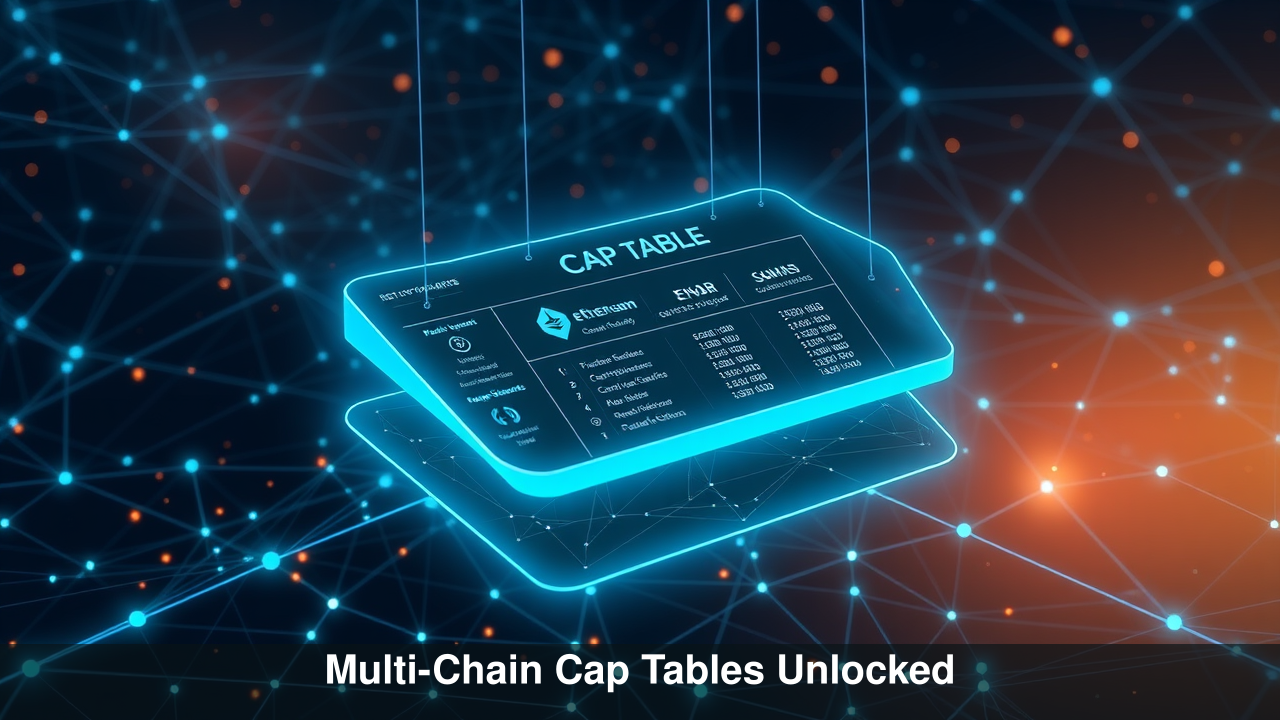
Syndicate operators manage equity positions for dozens or hundreds of members across multiple fundraising rounds. Each member holds allocations from different raises, on different chains, with different vesting schedules. A spreadsheet works for the first round. It fails when the syndicate participates in five simultaneous raises and members hold positions across Ethereum, BNB Chain, and Solana.
The cap table question is simple: who owns what, and when can they claim it? The answer requires tracking wallet addresses, token contracts, vesting start dates, cliff periods, and distribution amounts across every chain the syndicate operates on. Most operators reconcile this data manually every month. They export on-chain records, match them to internal spreadsheets, and hope the numbers align.
Why Manual Cap Tables Fail for Multi-Chain Syndicates
A single-chain syndicate can track allocations with a spreadsheet and periodic Etherscan checks. Multi-chain syndicates face a different problem. Member A holds vested tokens on Ethereum from Round 1, locked tokens on BNB Chain from Round 2, and staking positions on Solana from Round 3. The operator needs a consolidated view to answer basic questions: What is Member A's total equity? When do their next tokens vest? What percentage of the syndicate do they own?
Manual reconciliation introduces errors. An operator exports data from three block explorers, pastes it into a master sheet, and calculates pro-rata shares. One mismatched wallet address or missed transaction means the entire cap table is wrong. Members notice when distributions do not match their expected allocations. The operator spends hours debugging spreadsheet formulas instead of evaluating new deals.
Vesting adds another layer. A member's allocation might vest monthly over 12 months, with a three-month cliff. The operator tracks the start date, calculates the vested amount each month, and updates the cap table. Multiply that by 50 members and five active raises. The spreadsheet becomes unmanageable.
What Automated Cap Table Management Looks Like
Automated cap table software connects directly to on-chain data. The system reads wallet balances, token contracts, and vesting schedules from every chain the syndicate uses. It calculates each member's current equity, upcoming vesting events, and pro-rata share of the total pool. The operator views a single dashboard instead of reconciling multiple spreadsheets.
When a new raise completes, the operator adds the token contract and member wallet addresses. The system pulls allocation data from the blockchain and updates the cap table automatically. Vesting schedules are calculated from on-chain vesting contracts, not manually entered dates. The cap table reflects real-time data, not month-old exports.
Member-level reporting becomes straightforward. Each member logs in and sees their own allocations across all raises and chains. They view total equity, vesting schedules, and upcoming claim dates. The operator does not field questions about allocation amounts or vesting timelines because members have direct access to the data.
Key Features for Syndicate Cap Table Tools
Effective cap table management for crypto syndicates requires specific capabilities:
- Multi-chain wallet tracking: the system must read balances and transactions from every chain the syndicate uses, not just Ethereum or BNB Chain
- Vesting schedule automation: the platform calculates vested amounts from on-chain vesting contracts and displays upcoming cliff and release dates
- Pro-rata calculations: the system computes each member's percentage ownership of the total pool and updates it when new allocations are added
- Member portals: individual members access their own allocation data, vesting schedules, and claim history without operator intervention
- Distribution workflows: the operator initiates payouts through smart contracts, and the system tracks on-chain confirmations
Syndicates that manage more than three active raises or operate across more than two chains benefit from automated cap table management. The time saved on manual reconciliation allows operators to focus on deal sourcing and member communication.
How Cryptool Handles Multi-Chain Cap Tables
cryptool's group management module tracks member allocations across every wallet and chain the syndicate uses. The platform connects to on-chain data sources and updates cap tables automatically when new transactions occur. Operators view consolidated equity positions, vesting schedules, and pro-rata shares for every member in one dashboard.
The system supports role-based access controls. Operators assign member tiers and permissions, and each member sees only their own allocation data. The platform handles vesting calculations, distribution workflows, and member reporting without manual spreadsheet updates.
cryptool is non-custodial. Funds interact with smart contracts directly, and the platform reads on-chain data without holding member assets. Syndicates add any wallet from any provider on any chain, and the system tracks allocations across all of them.
Start managing your syndicate cap table at cryptool.io. Free to set up, no card required.
Common questions
What is a crypto cap table?
A crypto cap table is the record of who owns what inside a pooled or syndicated position: each member's contribution, their pro rata share, vesting terms, and what they are owed at each unlock. The chain sees one wallet balance, so the cap table is the layer that maps that balance back to individual members.
How do you manage a cap table across multiple raises?
You need member level positions that persist across deals, pro rata computed from recorded contributions rather than memory, and vesting attached to each allocation as data. Doing this by hand across several raises is where allocation errors are born, usually discovered by the member who was underpaid.
Do you need custody of assets to manage a syndicate cap table?
No. A cap table only needs to know positions and contributions, not hold the assets. Cryptool tracks member allocations and cap tables non custodially, so admins get the full ownership picture without ever taking custody of the pool.

'%3e%3cpath%20d='M3.58464%2016.6693C3.1263%2016.6693%202.73394%2016.5061%202.40755%2016.1797C2.08116%2015.8533%201.91797%2015.4609%201.91797%2015.0026V5.0026C1.91797%204.54427%202.08116%204.15191%202.40755%203.82552C2.73394%203.49913%203.1263%203.33594%203.58464%203.33594H16.918C17.3763%203.33594%2017.7687%203.49913%2018.0951%203.82552C18.4214%204.15191%2018.5846%204.54427%2018.5846%205.0026V15.0026C18.5846%2015.4609%2018.4214%2015.8533%2018.0951%2016.1797C17.7687%2016.5061%2017.3763%2016.6693%2016.918%2016.6693H3.58464ZM10.2513%2010.8359L16.918%206.66927V5.0026L10.2513%209.16927L3.58464%205.0026V6.66927L10.2513%2010.8359Z'%20fill='%232F4644'/%3e%3c/g%3e%3c/svg%3e)


'%3e%3cpath%20d='M17.6986%203.85159L15.058%2016.3047C14.8587%2017.1836%2014.3392%2017.4024%2013.6009%2016.9883L9.57749%2014.0235L7.63608%2015.8906C7.42124%2016.1055%207.24155%2016.2852%206.82749%2016.2852L7.11655%2012.1875L14.5736%205.44924C14.8978%205.16018%2014.5033%205.00002%2014.0697%205.28909L4.85093%2011.0938L0.882175%209.85159C0.0188933%209.58205%200.00326826%208.9883%201.06186%208.57424L16.5853%202.59377C17.3041%202.32424%2017.933%202.75393%2017.6986%203.85159Z'%20fill='%232F4644'/%3e%3c/g%3e%3cdefs%3e%3cclipPath%20id='clip0_17601_246206'%3e%3crect%20width='17.5'%20height='20'%20fill='white'%20transform='translate(0.25)'/%3e%3c/clipPath%3e%3c/defs%3e%3c/svg%3e)